Showing posts with label safety. Show all posts

Friday, May 16, 2014

Nissan Quest under investigation for inaccurate fuel gauges

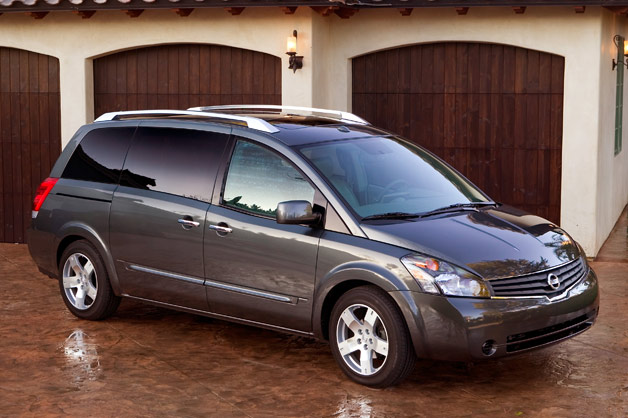
2007 Nissan Quest


After receiving 12 complaints in the last 14 months, the National Highway Traffic Safety Administration has begun a preliminary investigation into a fuel gauge issue with the 2007 Nissan Quest. Drivers have reported that the fuel level gauge will show there's gas in the tank when there actually isn't - in two cases, the digital distance-to-empty gauge indicated more than 70 miles of remaining range - and it will stall out.

This is the second time the 2007-model-year Quest has been involved in the same fuel gauge issue. In 2010 Nissan recalled seven models, including the Quest, from the 2005-2008 model years because of faulty fuel readings. The 12 vehicles in this latest complaint could have slipped through the cracks then, but we'll find out more when NHTSA updates its progress with the investigation into the estimated 37,656 units.
This post was made using the Auto Blogging Software from WebMagnates.org This line will not appear when posts are made after activating the software to full version.
Wednesday, May 14, 2014

Audi UK in hot water over dealer safety claims

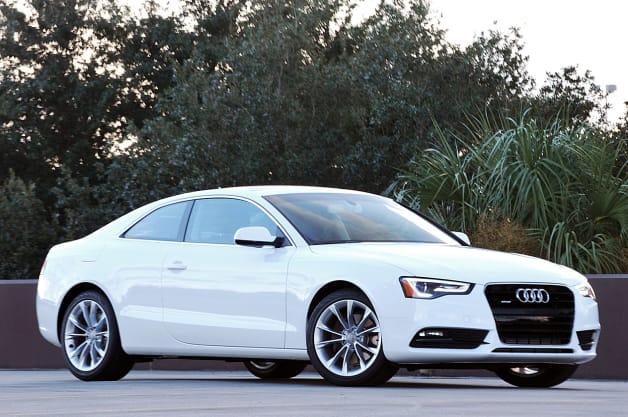
2013 Audi A5


Car salesmen don't exactly have a reputation for being in the most truthful profession, and it appears that several Audi showrooms in the UK are playing into that stereotype. A BBC investigation found that multiple dealers told buyers that the company's models scored well in Euro NCAP crash tests. No big deal, right? The problem was that the vehicles were never actually evaluated.

The report began after an R8 buyer sent in a tip that his UK dealer claimed the sports car had received top Euro NCAP scores. However, it has never been tested by the organization. The BBC called 10 dealers inquiring about the A5 (pictured above), which also wasn't assessed. Nine said the coupe had been checked out, and six claimed it had a five-star rating - the best available.

Euro NCAP is funded by governments and motoring bodies, like the ADAC in Germany and the FIA. According to its website, the organization selects some of the most popular new models each year to crash test, and, the BBC claims, automakers can also pay to evaluate their cars. The last Audi tested was the A3 in 2012. The A6, Q3, A1, A4 and Q5 have also been tested since 2009, and they all received five-star ratings. However, the A5, A7, A8 and R8 have not been tested.

Audi UK responded to Autoblog's questions by emailing a prepared statement, saying that there was no "deliberate intent to mislead." The company is now reviewing its training procedures. This case demonstrates that it's probably best to double-check anything salespeople tell you, regardless of what they are selling. Scroll down to read the full response.
This post was made using the Auto Blogging Software from WebMagnates.org This line will not appear when posts are made after activating the software to full version.
NYC mayor importing traffic safety program from Sweden to end road deaths

Evening in Stockholm

The streets of New York City are getting a Scandinavian makeover to be safer for pedestrians. Mayor Bill De Blasio has taken inspiration from Sweden's Vision Zero law, which has as it's goal the eradication of roadway deaths. He is bringing many of its concepts to the Big Apple.

Sweden's 1997 law stipulates that no one is should die in an accident on the country's roads, and the government should do whatever it can to make things safer. Its methods have been drastic, but they have worked. While some streets in Stockholm now have speed limits below 20 miles per hour, the country boasts the lowest rate of traffic deaths in the world. According to The New York Times, 264 people died on the highways in all of Sweden last year, compared to 290 in just New York City. The road mortality rate in Stockholm is about a third of NYC.

De Blasio created his own Vision Zero Action Plan in February with 2024 as a goal to eradicate traffic deaths, and he is consulting with Swedes on how to do it. The first portions of the plan are already going into effect. According to NYT, new rules are slowing vehicles in some areas to 25 mph, down from 30 mph. There are also 120 new speed cameras going up around schools in the city. Police will also be enforcing speeding more. The next steps may be putting data recorders in taxis, widening parking lanes and a possible congestion charge in certain parts of the metropolis.

While the complete eradication of deaths may never be possible, it seems like an admirable goal. New York's streets were already on the road to being safer. According to the NYT, traffic deaths have fallen 26 percent since 2001. De Blasio's plan hopes to accelerate that decline. Manhattan may never have the old-world charm of Stockholm, but its avenues could be just as safe.
This post was made using the Auto Blogging Software from WebMagnates.org This line will not appear when posts are made after activating the software to full version.

Saturday, May 10, 2014

Ford recalling nearly 700k Escape CUVs, C-Max hybrids over two separate safety issues

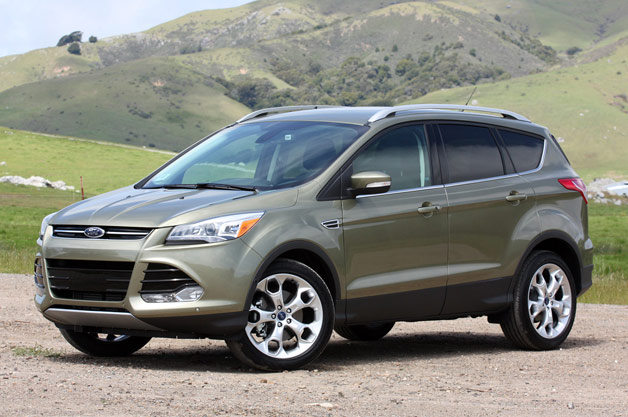
2013 Ford Escape


Poor Escape. Ever since its launch in 2012, Ford's small CUV has been the subject of many, many, many recalls. And today, The Detroit News is reporting that Ford is adding two more recalls to the 2013-14 model year Escape's permanent record, one of them also involves the C-Max hybrid hatchback.

The first recall, covering 692,500 Escape and C-Max vehicles, is due to a software glitch that could cause the airbags - specifically, the safety canopy - to not deploy in a timely fashion during rollover crashes. According to the News, Ford says no crashes or injuries have been reported in relation to this problem.

The second recall, covering 692,700 Escapes, is related to the door handles. The News reports that the exterior door handles could open while the vehicle is in motion, and could also fail to latch properly. Once again, no crashes or injuries have occurred because of this. The National Highway Safety Traffic Administration has not issued an official notice on either recall as of this writing.

If that math doesn't seem to add up, it's important to note that all of the Escapes involved in the airbag recall are also included in the door handle issue. Might as well just fix 'em all at once, right?

The Detroit News reports that, in the airbag recall, dealers will reprogram the vehicles' restraint control modules. For the second recall, dealers will inspect all four of the Escapes' door handles and reposition them if needed.
This post was made using the Auto Blogging Software from WebMagnates.org This line will not appear when posts are made after activating the software to full version.

Friday, May 9, 2014

DOT, GM tests say single key is safe for recalled vehicles [w/video]

Transportation Foxx


Throughout General Motors' ignition switch recall, the embattled, Detroit-based manufacturer has maintained the mantra that some 2.6 million recalled vehicles were safe to drive, provided certain precautions were taken.

Now, GM has issued a video that it says is proof of that point. Starring Vice President of Global Safety Jeff Boyer, the video shows a number of tests carried out on affected vehicles at GM's sprawling Milford, MI proving grounds. Engineers beat the heck out of the cars, just to prove that if there's nothing on the key - not even the key fob - that even some seriously brutal roads won't switch off the ignition switch.

The GM video comes on the same day that the US Department of Transportation declared that recalled GM vehicles did not need to be parked, following a petition from a pair of Democratic senators. According to Reuters, Senators Edward Markey of Massachusetts and Richard Blumenthal of Connecticut have argued that affected models shouldn't be driven until repairs can be completed.

Secretary of Transportation Anthony Foxx (shown above) dismissed the senators' arguments, though, writing that "such an action is not necessary at this time," and that the DOT's National Highway Traffic Safety Administration "is satisfied" with GM's temporary solution to the problem.

According to Reuters, Senators Markey and Blumenthal's concerns rested with the performance of the faulty ignition switches on rough roads. This video should, hopefully, allay those concerns.

Take a look below for the video from GM, and then head into Comments and tell us - is the blessing of GM and Secretary Foxx enough for you to get back behind the wheel of a recalled Chevrolet Cobalt or Saturn Ion? Let us know.
This post was made using the Auto Blogging Software from WebMagnates.org This line will not appear when posts are made after activating the software to full version.

Thursday, March 27, 2014

University of Michigan gives go ahead for $6.5M autonomous car test track

University of Michigan gives go ahead for $6.5M autonomous car test track


Autonomous cars might be the next big leap in not only making driving easier but also in automotive safety. But where do you test them? Not many cities want to allow several tons of metal piloted by computers to roam their streets, but the University of Michigan has found a solution. Its Board of Regents recently gave construction approval to a $6.5-million test track. The track will allow autonomous vehicles to be tested in real world conditions and includes merging lanes, roundabouts, gravel roads, traffic lights and a stretch of four-lane highway.

Tuesday, January 22, 2013

GM Issues Small-Scale Recall for GMC Savana and Chevy Express

GM Issues Small-Scale Recall for GMC Savana and Chevy Express

Recalls for commercial vehicles are far less frequent than those for passenger cars, because such vehicles are usually less-innovative than their people-carrying counterparts, and therefor many proven parts are carried over from previous generations, for improved reliability.

However, they do occur, and GM has just announced a small-scale recall for the Chevrolet Express and the GMC Savana, due to fears of the vehicles rolling away, as it is possible to take the key out of the ignition, without the vehicle being in 'park'.

A total of 980 units are affected, and they will be brought back to GM dealerships, where the ignition cylinder and keys will be replaced free of charge. We don`t know if the parts were faulty to begin with, or were the subject of excessive wear, but they require replacement.

The affected Chevy-branded vans were built between November and December of last year, while the GMC version with the fault was only built for a week in November. The recall begins on January 23 and owners of the affected vehicles will be notified in due time.